Italian is one of the friendliest languages an English speaker can pick up. The spelling is almost perfectly phonetic, thousands of words look like their English relatives, and the sounds are open and musical. This guide walks you through exactly how to learn it: how hard it really is, how long it takes, where to start, the fastest path, how to build lasting vocabulary, and a realistic plan you can actually follow — with reading at the center of everything.
Is Italian hard to learn for English speakers?
Not very. For native English speakers, Italian is one of the easiest languages to learn. The U.S. Foreign Service Institute places it in Category I, roughly 600 to 750 hours to reach professional working proficiency. Its phonetic spelling, huge stock of shared Latin vocabulary, and clean, predictable sound system all work in your favor.
“Hard” is relative, and it depends entirely on your starting point. Because English absorbed so much Latin and French vocabulary, and because Italian descends directly from Latin, the two languages overlap far more than most beginners expect. That head start is real, and it shows up on your very first day of reading.
A shared vocabulary you already half-know
Open almost any Italian text and you will recognize words before you have studied a single one. Importante, differente, momento, problema, musica, artista, famiglia, ristorante — these decode themselves. Even better, Italian follows tidy transformation patterns that let you convert English words on sight. English -tion almost always becomes -zione (nazione, stazione, informazione), -ty becomes -tà (università, città, libertà), and -ous becomes -oso (famoso, curioso, nervoso). Learn a few of these mappings and hundreds of words become free.
Spelling you can trust
English spelling is chaos. The letters ough sound different in through, tough, though, and thought. Italian never does this to you. Once you learn its handful of spelling rules, every letter maps reliably onto a sound, and it stays that way. See a word, and you can say it. This transparency is a genuine gift for a reader, because your brain does not have to store a separate, unpredictable pronunciation for each word.
Sounds you can mostly already make
Italian uses a compact set of clear vowels and very few sounds that are alien to English speakers. There is no tricky throat-clearing consonant, no tonal system, no unfamiliar vowel forest. The rolled r takes some practice, and the doubled consonants need attention, but nothing in the sound system will stop you from being understood in your first month.
Where the difficulty actually lives
Italian is not effortless. The real work sits in grammar: nouns have gender, adjectives and articles must agree, verbs conjugate into many forms, and the subjunctive mood appears constantly in everyday speech. These take time. But none of them block you from starting to read and speak, and — as you will see — reading is the most efficient way to absorb them.
How long does it take to learn Italian?
Plan on roughly 600 to 750 hours of focused study to reach solid conversational and working proficiency, according to FSI estimates. At an hour a day, that is about two years; at thirty minutes, longer. You will feel real, usable progress far sooner — ordering food, reading simple stories, and holding basic conversations within a few months of steady practice.
The Foreign Service Institute trains U.S. diplomats and has decades of data on how long languages take. It sorts them into categories by difficulty for English speakers, and Italian sits comfortably in the easiest tier alongside Spanish, French, and Portuguese.
Approx. hours to professional proficiency (FSI estimates, for native English speakers)
What the hours actually mean
Those numbers describe reaching a high, professional level — comfortably discussing complex topics, reading newspapers, handling work in Italian. That is a demanding bar. Most learners have humbler goals: traveling comfortably, reading books they love, chatting with relatives, or enjoying Italian film and music. You reach those milestones on a much shorter timeline.
- First few weeks: greetings, courtesies, ordering, asking simple questions, and reading very short, adapted texts.
- Two to three months: basic conversations about yourself, present-tense storytelling, and following graded readers with occasional lookups.
- Six months to a year: comfortable everyday conversation, reading learner news and simple short stories, understanding the gist of native audio on familiar topics.
- One to two years: reading real novels and journalism, expressing nuanced ideas, and functioning across most daily situations.
What actually determines your pace
The FSI figure assumes intensive classroom study. Your real timeline depends less on a magic method and more on habits: how consistently you practice, how much comprehensible input you get, and whether you use the language rather than just study it. A learner reading and listening a little every day will outrun one who crams sporadically, even with fewer total hours. For a broader look at the numbers across languages and how to set honest expectations, see our guide to how long it takes.
Where should you start with Italian?
Start with the sounds and the spelling, because Italian rewards you immediately: it is almost perfectly phonetic. Then learn a few hundred high-frequency words, the present tense of essere and avere, and the basics of how gender works. Within a couple of weeks you can read and say simple, correct sentences.
Resist the urge to buy a thick grammar book and start at page one. A cleaner sequence — sounds, then core words, then present-tense verbs, then reading — gets you to real Italian much faster and keeps you motivated.
Learn the phonetic rules first
Because pronunciation is so consistent, an hour spent on Italian's spelling rules pays off for the entire rest of your journey. A few key patterns cover most of it:
- The letter c. Before a, o, u it is a hard “k” (casa = KA-za). Before e or i it softens to “ch” (ciao = chow, cena = CHE-na). Add an h to keep it hard: chiesa (church) is “KYE-za.”
- The letter g. Same logic: hard in gatto (cat), soft “j” in gelato and giorno (day).
- The clusters gn and gli. Gn sounds like the “ny” in canyon (gnocchi, signore); gli is a soft “ly” sound (famiglia, figlio).
- The vowels. Five clean vowels — a, e, i, o, u — each pronounced fully and consistently. No silent letters at the ends of words.
Learn these and you can pronounce almost any Italian word on sight. That stable sound-to-symbol link is exactly what makes reading and listening reinforce each other so quickly.
Your first words
Begin with the courtesies and connectors that appear in every conversation: ciao (hi/bye), buongiorno (good morning), buonasera (good evening), grazie (thank you), prego (you're welcome / please go ahead), per favore (please), sì and no, scusa (sorry/excuse me), come stai? (how are you?), and mi chiamo… (my name is…). A hundred well-chosen words like these let you handle a surprising amount of everyday life.
The present tense of the two most important verbs
Two verbs carry more weight than any others: essere (to be) and avere (to have). Memorize their present tense early, because they show up everywhere, including inside other tenses.
- essere: io sono (I am), tu sei, lui/lei è, noi siamo, voi siete, loro sono.
- avere: io ho (I have), tu hai, lui/lei ha, noi abbiamo, voi avete, loro hanno.
Add the present tense of one regular verb from each of the three families — parlare (to speak), prendere (to take), dormire (to sleep) — and you can already build hundreds of real sentences.
Meet gender early, lightly
Every Italian noun is masculine or feminine, and the words around it must agree. You do not need to master this in week one, but you should start noticing it. Most nouns ending in -o are masculine (il libro, the book) and most ending in -a are feminine (la casa, the house). Nouns ending in -e can be either, so those you simply learn one at a time. Save every new noun with its article, and you sidestep a lot of future confusion.
What's the fastest way to learn Italian?
The fastest path combines large amounts of comprehensible input — reading and listening you mostly understand — with regular speaking practice. Reading is the engine, because it delivers vocabulary and grammar in real context, at your own pace, whenever you have a spare minute. Speaking then activates what your reading has quietly built.
There is no secret shortcut, but there is a clear principle: you learn a language mainly by understanding messages in it, not by memorizing rules about it. The linguist Stephen Krashen popularized this idea as comprehensible input, and it is the most reliable lever you can pull.
Get a lot of input you can mostly understand
Your brain acquires language by meeting it again and again in contexts it can follow. When roughly 95 to 98 percent of the words in front of you are familiar, you can infer the rest from context, and that inference is where much of the learning happens. Below that threshold, you are decoding rather than acquiring, which is slow and demoralizing. The goal, then, is a steady diet of Italian that is just a little above your current level.
Reading is the most efficient input there is
Listening is essential, but reading has unique advantages for building a language fast. It moves at your pace, so you can pause on a hard sentence without rewinding. It is dense with vocabulary. And it is available anywhere, silently, in any spare moment. Because Italian spelling is phonetic, reading also trains your pronunciation and feeds directly into listening. Read enough, and the words you meet on the page start turning up, recognizable, in the audio you hear.
Speak early, and let it be imperfect
Input builds the raw material; speaking makes it usable. You do not need to wait until you feel “ready.” Start saying simple things in your first weeks — ordering a caffè, introducing yourself, describing your day in the present tense. Mistakes are not setbacks; they are how the language settles in. A weekly conversation with a tutor or a language partner, paired with daily reading, is a powerful combination.
How oqou fits into the fastest path
The friction that kills most reading habits is the constant stopping to look words up. oqou removes it. You import anything you want to read — a book, a news article, a PDF — and tap any word to get its meaning in the context of that exact sentence, not a generic list. You save the words worth keeping and review them later with spaced repetition. The core loop runs on-device and private, so your library and your reading stay yours.
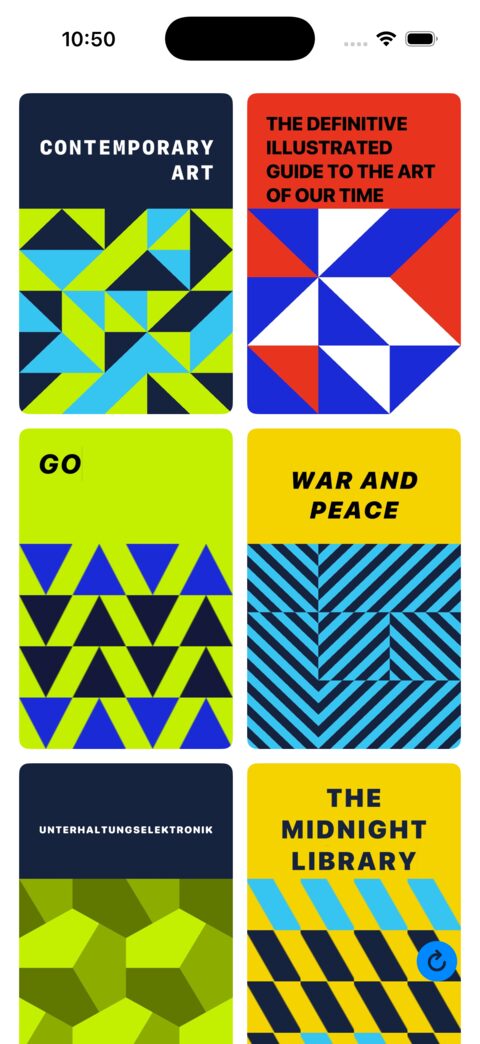
That small change — making lookups instant and keeping the text on your phone — is what lets you read real Italian far earlier than the old flashcards-first approach ever allowed. Download oqou on the App Store and start tapping words in Italian today.
How do you build Italian vocabulary that sticks?
Learn words in context, save the ones that matter, and review them with spaced repetition. Words you meet inside real sentences — with a story attached — stick far better than isolated flashcards. Focus on high-frequency vocabulary first, keep your saved list lean, and let your reading feed the review queue naturally.
Vocabulary is the single biggest predictor of how much Italian you understand. The good news is that you do not build it by grinding word lists; you build it by reading and reviewing intelligently.
Context beats isolated lists
A word learned from a bare translation is fragile. A word learned inside a sentence you understood — where you saw how it behaved and what surrounded it — comes with a hook your memory can grab. This matters especially in Italian, where meaning shifts with context. Tempo can mean time or weather. Piano can mean slowly, quietly, a floor of a building, or a plan. A context-aware lookup gives you the right sense on the spot, and the sentence anchors it in memory. Our deeper dive on learning by reading explains why this contextual approach is so much more durable.
Chase the high-frequency core first
A small number of words do most of the work in any language. In Italian, the few hundred most common words — articles, prepositions, pronouns, and workhorse verbs like essere, avere, fare (to do/make), andare (to go), and dire (to say) — make up the connective tissue of nearly every sentence. Prioritize these. Once they are automatic, reading gets dramatically easier, and you can pick up rarer words from context as you go.
Save less than you think you should
You cannot save every unknown word, and you should not try. Constantly capturing everything turns reading into data entry and buries the words that matter under ones you will never need. Save words that are common, that keep reappearing, or that feel genuinely useful for the topics you read. Let the rare, one-off words go — you can usually infer enough to keep moving.
Review with spaced repetition
Spaced repetition shows you a word right before you are likely to forget it, then stretches the interval each time you recall it correctly. It is a well-established, efficient way to move words from fragile short-term recognition into durable long-term memory. It works especially well when the words come from things you actually read, because each card already carries the memory of its original sentence. Ten minutes of review a day compounds into a large, solid vocabulary over months.
How do you start reading in Italian?
Start earlier than you think. Because Italian is phonetic and packed with cognates, even beginners can decode simple texts quickly. Begin with graded readers and children's books, move up to learner news and blogs, and work toward real literature — always matching the difficulty so you understand most of what you read at each step.
Reading in Italian is more approachable than in almost any other language, and it is the best thing you can do for your progress. Here is how to ease in without burning out.
Cognates and phonetic spelling make it approachable
Two features conspire to make Italian text friendly from the start. First, the cognates: a beginner reading a simple Italian article recognizes far more than the raw word count suggests, thanks to all those -zione, -tà, and -oso relatives. Second, the phonetic spelling means you can pronounce every word you read, so silent reading quietly trains your ear at the same time. Together they keep early reading from feeling like an impenetrable wall of unknowns.
Match the text to your level
The whole strategy is comprehensible input, so choosing the right difficulty is not a compromise — it is the method. A quick gut check works well: read a paragraph, and if you catch the gist while looking up only a word or two per sentence, the level is right. If nearly every word is a mystery, step down to something easier. There is no shame in reading “below” your ambition; meeting text you can actually follow is what makes the learning happen. If you are truly at square one, our guide to reading as a beginner covers how to start gently.
Climb the reading ladder
Progress by matching material to your stage. The table below maps each level to concrete text types and real Italian examples you can go find.
| Level | What to read | Example text types | Why it works |
|---|---|---|---|
| Beginner | Graded readers, children's picture books, dual-language stories, short dialogues | Adapted fairy tales, readers labeled livello principiante, children's classics like Pinocchio in simplified editions, short comics | Controlled vocabulary and present-tense-heavy grammar keep you in the comprehensible zone while you build the core word base. |
| Intermediate | Learner news, blog posts, short stories, recipes, song lyrics | Simplified news written for students, opinion columns, accessible short fiction, food blogs, lyrics by Italian singer-songwriters | Real but bite-sized texts introduce past tenses, idioms, and natural rhythm without a novel-length commitment. |
| Advanced | Full novels, unadapted journalism, essays, literary short fiction | Novels by authors such as Italo Calvino or Elena Ferrante, long-form reporting in major newspapers, literary magazines, public-domain classics | Unfiltered language exposes you to the subjunctive, complex tenses, regional voice, and the full stylistic range of Italian prose. |
Do not skip children's books
Pride tells beginners to avoid kids' material. Ignore it. Children's books use exactly the high-frequency vocabulary and simple structures you need, often with pictures that make the meaning obvious. A beloved Italian children's story is a far better first read than a newspaper front page, because the illustrations do half the comprehension work while your brain absorbs sentence patterns almost effortlessly.
Let a reader remove the friction
The one requirement for reading real Italian early is a fast way to handle unknown words without breaking your flow. Instead of copying words into a separate dictionary and losing your place, you import the text into a reader that lets you tap for an in-context meaning, save the word, and review it later. That single change turns the entire Italian internet — news, blogs, books, PDFs — into a personalized reading course tuned to your interests.
What are the trickiest parts of Italian?
A handful of features challenge English speakers: noun gender and agreement, the many verb conjugations, meaningful double consonants, the subjunctive mood, and the formal Lei. None of these block you from starting, and reading is the ideal place to meet each one in context — used correctly, over and over — until the patterns become intuition.
Think of this section as a map of where the effort concentrates, not a list of reasons to be intimidated. Every item here is something reading actively helps you internalize.
Gender and agreement
Every noun is masculine or feminine, and articles and adjectives must agree with it in gender and number. Il ragazzo alto (the tall boy) becomes la ragazza alta (the tall girl), and in the plural i ragazzi alti and le ragazze alte. The -o/-a rule of thumb covers most nouns, but nouns ending in -e keep you honest, and a few traps exist: il problema is masculine despite the -a, and la mano (the hand) is feminine despite the -o. Learn each noun with its article and agreement stops being guesswork.
Verb conjugation
Italian verbs come in three families — those ending in -are, -ere, and -ire — and each conjugates into many forms across person, tense, and mood. A single verb like parlare (to speak) yields parlo, parli, parla, parliamo, parlate, parlano in the present alone, and many more across tenses. You do not need to memorize full charts to read. You need to recognize that ho parlato, parlavo, and parlerò all belong to parlare, and a reader that shows the base form makes that pattern-spotting almost automatic.
Double consonants that change meaning
This is the feature most unique to Italian, and it matters more than beginners expect. A doubled consonant is pronounced longer, and the difference is not cosmetic — it changes the word. Watch these pairs:
- pala (shovel) vs. palla (ball)
- casa (house) vs. cassa (crate / checkout)
- nonno (grandfather) vs. nono (ninth)
- sete (thirst) vs. sette (seven)
- penna (pen) vs. pena (pain / pity)
- copia (copy) vs. coppia (couple)
In writing, you simply have to spell them correctly; in speech, you have to hold the doubled sound a beat longer. Reading a lot trains your eye to expect the double where it belongs, and pairing reading with listening trains your ear to hear it.
The subjunctive (il congiuntivo)
Italian uses the subjunctive mood far more than modern English does, especially after expressions of opinion, doubt, desire, and emotion. Penso che sia vero (I think it is true) uses sia, the subjunctive of essere, not è. It feels foreign at first, and you do not need to produce it to begin reading or speaking. What reading does is let you meet it in the wild — triggered by phrases like penso che, spero che, credo che — again and again, so that by the time you study it formally, you already recognize the pattern.
The polite Lei
Italian distinguishes informal and formal “you.” With friends and family you use tu; in polite or professional settings you use Lei (often capitalized in writing), which takes third-person singular verb forms. So “How are you?” is Come stai? to a friend but Come sta? to a stranger or an elder. Curiously, Lei literally means “she,” yet it addresses anyone politely regardless of gender. Knowing when to switch registers is part of sounding natural, and reading dialogue — where characters shift between tu and Lei — teaches the social logic better than a rule ever could.
False friends (falsi amici)
A few words look like English but mean something else, and they can trip you up:
- caldo means hot, not cold (cold is freddo).
- parenti means relatives, not parents (parents are genitori).
- libreria is a bookshop, not a library (a library is biblioteca).
- camera means room, not camera (a camera is macchina fotografica).
- fattoria means farm, not factory (a factory is fabbrica).
- educato means polite, not educated (educated is istruito).
A quick in-context lookup protects you from confidently misreading a sentence, and over time you collect these traps naturally as you read.
What resources should you use?
Use a small, complementary mix: a phonetics primer, a beginner course or app for structure, graded readers for reading, native news and podcasts for real input, a spaced-repetition system for vocabulary, and a conversation partner or tutor for speaking. The best resource is not the fanciest — it is the one you will actually return to every day.
You can waste weeks collecting apps and books you never open. A leaner toolkit, used consistently, beats an overflowing shelf. Here is a sensible set, organized by what each part is for.
For the foundations
Spend a short, focused stretch on pronunciation rules and the most common words and verbs. A beginner course, a well-reviewed app, or a good phrasebook gives you the scaffolding: how the sound system works, how gender and agreement behave, and the present tense of the core verbs. You need this only long enough to start reading and speaking — not to “finish” before you touch real Italian.
For reading
Graded readers are the single best resource for beginners, because their vocabulary is controlled to a target level. As you climb, add learner-oriented news, blogs on topics you love, and eventually novels and journalism. The multiplier is a reader that lets you tap for in-context meaning and review saved words, so any Italian text — not just “study material” — becomes a lesson.
For listening
Pair reading with audio so the two reinforce each other. Slow, learner-focused podcasts are ideal early on; Italian music, films, and series come next. Because the spelling is phonetic, the words you have read start to jump out of the audio, and comprehension climbs faster than either skill would alone.
For vocabulary
A spaced-repetition system keeps the words you meet from slipping away. The most effective version pulls words from your own reading, so every review card carries the memory of a real sentence. Ten minutes a day is plenty.
For speaking
Nothing replaces using the language with a person. A weekly tutor, a language-exchange partner, or a conversation group turns your passive knowledge active. Even short, halting conversations accelerate everything else, because they show you exactly which words and structures you actually reach for.
Bring them together
The pieces work best as a loop: read a little every day, save and review new words, listen to reinforce them, and speak to activate them. You do not need all of it on day one. Start with reading plus a spaced-repetition habit, add listening, and layer in speaking as your confidence grows.
What does a realistic Italian learning plan look like?
A realistic plan moves you through the CEFR levels over roughly one to two years of steady daily practice. Build sounds and a core vocabulary first, read every day at your level, review words with spaced repetition, start speaking early, and add listening throughout. The roadmap and level table below map the whole journey.
Treat this as a flexible template, not a rigid syllabus. What matters is the shape of the progression: easy and frequent at first, gradually harder and longer, with reading running through all of it as the constant.
- 1Sounds & sight — Spend your first week on Italian's phonetic rules so you can pronounce any word you read, and learn your first 100 courtesy and connector words.
- 2Core words & present tense — Build to ~500 high-frequency words and the present tense of essere, avere, and one verb from each family. Save every noun with its article.
- 3Read every day — Start graded readers and children's stories for 15 minutes daily. Tap unknown words for in-context meaning and keep the streak alive.
- 4Widen input, review words — Add learner news, blogs, and podcasts. Meet past tenses and the subjunctive in context, and review saved words with spaced repetition.
- 5Speak & read the real thing — Start weekly conversations, tackle your first short stories and novels, and let Lei, agreement, and idioms become second nature.
Map the levels to what you can read
The Common European Framework (CEFR) describes proficiency in six levels, from A1 (beginner) to C2 (mastery). The table below ties each stage to a rough cumulative study time and the kind of Italian reading that fits, so you always know what to reach for next.
| CEFR level | Rough cumulative hours | What you can do | What to read |
|---|---|---|---|
| A1–A2 (Beginner) | ~0–180 h | Handle greetings, simple present-tense sentences, everyday needs like ordering and shopping | Graded readers, children's books, dual-language stories, short dialogues |
| B1 (Intermediate) | ~180–350 h | Hold everyday conversations, describe experiences, follow familiar topics in past and future tenses | Learner news, blogs, easy short stories, song lyrics, recipes |
| B2 (Upper intermediate) | ~350–600 h | Discuss abstract ideas, understand most native media, express nuanced opinions | Native newspapers, popular novels, longer essays, podcasts with transcripts |
| C1–C2 (Advanced) | ~600–900+ h | Function comfortably at work, grasp subtlety and idiom, read almost anything | Literary fiction, unadapted journalism, specialized and academic texts |
A week-by-week rhythm that works
Zoom in from the levels to your actual days, and a simple weekly rhythm keeps everything moving:
- Daily reading (15–20 minutes). The non-negotiable core. Read at your level, tap what you do not know, and keep the chain unbroken — even a single paragraph on a busy day counts.
- Daily review (10 minutes). Run your spaced-repetition cards, drawn from the words your reading surfaced.
- Regular listening (a few times a week). Podcasts, music, or a show, ideally on topics you have been reading about.
- Weekly speaking (one session). A tutor, exchange partner, or group to turn passive knowledge active.
Notice how modest this is. It is not a heroic cram; it is a small, sustainable set of daily actions that compound. Ninety days of this rhythm will not make you fluent — be suspicious of anyone who promises it will — but it will make Italian reading a normal part of your life and give you a vocabulary base that keeps growing on its own.
Everything in this plan reduces to one repeatable action: read something in Italian, tap what you do not know, and keep going. Get oqou on the App Store and turn your reading into real Italian.
Frequently asked questions
Can I learn Italian on my own?
Yes. With today's resources you can take yourself a long way solo: graded readers and a tap-to-translate app for reading, podcasts for listening, and a spaced-repetition habit for vocabulary. The one thing self-study cannot fully replace is speaking practice, so add a tutor or exchange partner when you are ready to make your Italian active.
Is Italian or Spanish easier for English speakers?
They are very close. Both are Category I languages that the FSI estimates at around 600 to 750 hours, and both have phonetic spelling and abundant cognates. Spanish has slightly more learner material and speakers worldwide; Italian has a marginally more compact sound system. Pick the one whose culture, family ties, or travel plans pull at you — motivation matters far more than any tiny difficulty gap.
How long until I can hold a conversation in Italian?
With consistent daily practice, many learners manage basic conversations — introducing themselves, ordering, asking simple questions — within two to three months, and comfortable everyday conversation within six months to a year. Speaking early, even imperfectly, speeds this up dramatically. The more you use what you are reading and reviewing, the faster your speaking catches up.
Do I need to learn all the verb tenses before reading?
No. You can start reading comfortably with just the present tense of a few key verbs. You will meet the past and future forms naturally in your reading, and seeing them used in real sentences teaches them more durably than memorizing charts ever could. Recognize that ho parlato and parlerò come from parlare, and the details follow with exposure.
Do I need to live in Italy to become fluent?
No. Living in Italy helps by surrounding you with input and forcing you to speak, but you can recreate both at home. Read Italian daily, listen to Italian audio, and schedule regular conversations online. Immersion is really just a lot of comprehensible input plus real use — and you can build that anywhere with the right habits.
You do not need a perfect plan or a big vocabulary to begin. You need one Italian text at roughly your level, a way to tap the words you do not know, and the small daily habit of showing up. Pick something you would genuinely enjoy reading, start today, and let the words accumulate. Your future Italian-reading self is built one tapped word at a time.