Nobody is coming to teach you — and that's fine. Plenty of people reach real fluency in a language without ever sitting in a classroom, and you can be one of them. Learning a language by yourself isn't a lesser path; done well, it's often cheaper, more flexible, and more durable than a class you half-attend. This guide lays out exactly how to do it: what to do, in what order, and how to keep going when no one is watching.
Can you learn a language on your own?
Yes. People teach themselves languages to a high level all the time, and the tools to do it have never been better. What a class gives you — structure, feedback, and a reason to show up — you can reproduce on your own with a simple plan, good material, and a habit. The catch is honesty about the timeline and the work.
It helps to see what a class actually provides, because then you can decide which parts you need to rebuild for yourself. A good class offers three things: a sequence so you're not guessing what to learn next, correction so your mistakes don't calcify, and social pressure so you keep turning up. Notice what it doesn't offer — the language itself doesn't come from the teacher. It comes from the hours you spend understanding and using the language, and those hours are yours to arrange however you like.
That reframe is the whole game. A classroom is one delivery system for exposure and practice; it is not the only one, and for many adults it isn't even the most efficient one. A three-hour weekly class is three hours. A self-learner who reads on the train and listens while cooking can log far more contact than that without clearing their calendar. The self-taught path loses the built-in accountability, but it wins on volume and on fit — you study what you care about, at your level, at your pace.
Let's also set expectations honestly, because false promises are how people quit. You will not wake up fluent in a month, and no app or method changes that. Languages are learned in thousands of small encounters over many months, sometimes years, depending on how far the language sits from ones you already know and how much time you can give it. But — and this is the encouraging part — you will see real, motivating progress much sooner than fluency. Within weeks you'll recognize words in the wild. Within a couple of months you'll follow the gist of things you couldn't touch before. The finish line is far, but the road is rewarding the whole way, and every step of it is walkable alone.
What do you need to self-study a language successfully?
You need four things: a simple plan so you always know your next move, a steady supply of comprehensible input you can mostly understand, some way to practice speaking, and enough consistency to keep contact going for months. That's the entire recipe. Everything else — apps, methods, books — is just a way of delivering those four ingredients.
Because self-study fails most often from vagueness, it's worth pinning down each ingredient so you know what you're actually building.
A simple plan
You don't need a syllabus in a binder; you need a default answer to “what do I do today?” so you never waste your energy deciding. A plan can be as short as a sentence: read for twenty minutes, review yesterday's words, listen to a podcast on the walk. The value of the plan isn't its sophistication — it's that it removes the daily negotiation with yourself. We'll build a concrete one later in this guide.
Comprehensible input
This is the engine. The core idea from language acquisition research is that you absorb a language mainly by understanding messages — following what something means — not by memorizing rules about it. Input pitched a little above your current level, where you catch the gist and pick up the new pieces from context, is the sweet spot. Reading and listening you can mostly follow is the raw material your brain turns into fluency.
Speaking practice
Input builds the language; output activates it. At some point you have to move the words from “recognize” to “produce,” and that means speaking and, to a lesser degree, writing. You can delay heavy speaking while your comprehension grows, but you shouldn't skip it forever. The good news is you can practice it alone or online, without a teacher in the room, which we'll cover in detail.
Consistency
None of the above matters without the fourth ingredient, which is simply showing up over and over. Languages reward frequent contact because each meeting with a word keeps it from fading. Consistency is the one thing a class quietly enforces and a self-learner has to build on purpose — so most of this guide is really about making the other three ingredients easy enough that consistency stops being a struggle.
How do you build a self-study routine that sticks?
You build a routine that sticks by attaching it to things you already do, keeping the daily minimum small, and choosing material so interesting that showing up feels like a reward rather than a chore. Willpower is unreliable and runs out; a routine wired into your existing day survives your bad moods, your busy weeks, and your flagging motivation.
The mistake most self-learners make is designing a routine for their best self — the one with two free hours and boundless discipline. That person shows up for a week and then vanishes. Design instead for your ordinary, tired, distracted self, and build in three features that make a habit durable.
Anchor new habits to old ones
Don't rely on remembering to study; bolt each session onto a cue that already fires every day. “After I pour my morning coffee, I read for fifteen minutes” is far sturdier than “I'll study at some point,” because the coffee does the reminding for you. Your commute, your lunch break, your dog walk, your couch time after dinner — each is a hook you can hang a small session on.
Set a floor so low you can't fail
Decide on a minimum so tiny you can hit it on your worst day — even five minutes of reading counts. The point of a laughably small floor isn't the five minutes; it's protecting the streak. Missed days are fine and inevitable. Missed weeks are where people quietly quit, and a minimum you can always clear is your insurance against the slow fade.
Make the material something you'd choose anyway
Consistency stops being a battle when the content pulls you back on its own. A gripping novel, a channel about your actual hobby, news you'd read regardless — when you want to know what happens next, you don't need discipline to open the app. If something bores you, drop it without guilt and find something better. Boredom is a content problem, not a character flaw.
Here's how those principles turn into an actual week. Treat this as a template, not a law — shift the slots to fit your life, and protect the daily reading above everything else.
| Day | Core session (reading) | Add-on | Rough time |
|---|---|---|---|
| Monday | Read an article or book pages, tap and save new words | Podcast on the commute | 30–40 min |
| Tuesday | Read; review yesterday's saved words first | Shadow a short audio clip | 25–35 min |
| Wednesday | Read a new text on a topic you enjoy | Tutor or exchange session | 45–60 min |
| Thursday | Read; spaced-repetition review of the week's words | Show with target-language subtitles | 40–50 min |
| Friday | Light read — hit the minimum, no pressure | Re-listen to a favorite podcast | 15–25 min |
| Saturday | Longer read — a full chapter or two articles | Self-talk: narrate your errands aloud | 30–45 min |
| Sunday | Read for pleasure; review saved words | Plan next week's material | 20–30 min |
Notice the shape of the week: reading is the constant, one speaking session is protected midweek, and the other channels rotate in as add-ons. Friday is deliberately light so a busy week never breaks the chain. Adjust the numbers freely — the exact minutes matter far less than the fact that the language showed up every single day.
What's the best self-study method?
The most reliable self-study method is a loop: get lots of comprehensible input — mostly through reading — save the words you don't know, and lock them in with spaced repetition. Reading gives you volume on your schedule, saving turns passive encounters into a study list, and spaced repetition makes the words stick. Layer listening and speaking on top as you grow.
There's no single magic method, but there is a clear winner for people learning alone, and it's worth understanding why it works before you adopt it. If you want the full comparison of approaches, our guide to the best way to learn a language digs deeper; here's the short version of the loop.
Reading as your primary input
Reading is the backbone of self-study for a simple reason: it's unlimited, self-paced, and the easiest channel to make comprehensible. When you listen, the audio moves at the speaker's pace and a missed word is gone. Reading is patient — a hard sentence just sits there while you work it out and read it again. That patience is why text is where most solo learners get their volume, and volume is the whole game. Reading also feeds your other channels: the words and patterns you meet on the page make listening easier because you're recognizing what you've already seen. Our full walkthrough of learning by reading covers the technique end to end.
Saving the words you meet
Reading alone teaches a lot, but you'll forget most new words unless you capture them. The habit that changes everything is saving unknown words in context as you read — not into a random list, but tied to the sentence where you met them. Context is what makes a word memorable and usable; a word learned from the sentence it lived in carries its meaning, its register, and its typical company along with it.
Spaced repetition to make it stick
The final piece is review timed to fight forgetting. Spaced repetition shows you a word just as you're about to lose it, then stretches the interval each time you recall it — a few minutes, then days, then weeks. It's dramatically more efficient than re-reading a list, because it concentrates your effort on exactly the words at risk of slipping away and stops wasting time on the ones you already own. Reading feeds the queue; spaced repetition empties it into long-term memory.
Put together, the loop is self-correcting and self-fueling: the more you read, the more words you save; the more you review, the more you understand next time you read; and the easier reading gets, the more you want to do it. That virtuous circle is the closest thing self-study has to a secret.
How do you learn grammar on your own?
Learn grammar lightly and mostly through exposure. The bulk of your grammar will come from meeting the same structures over and over in your reading and listening until they feel normal. Keep a concise reference book or website nearby for the moments you want a rule explained, but treat grammar as a support act, not the headliner — drilling it in isolation is slow and rarely transfers to real use.
This is where a lot of self-learners go wrong. They mistake studying about the language for learning the language, and spend months conjugating tables they still can't deploy in a sentence. Grammar knowledge and grammar ability are different skills, and only one of them helps you read a book or hold a conversation.
Let exposure do most of the work
Your brain is extraordinary at extracting patterns from examples — it's how you learned your first language without a single rule explained. When you read widely, you meet a grammatical structure hundreds of times across different sentences, and it gradually becomes intuition. You start to feel that one form sounds right and another sounds off, long before you could name the rule. That felt sense is what fluent use actually runs on, and it comes from volume, not from drills.
Use a reference for targeted clarity
Exposure has one weakness: some patterns are hard to notice on your own, especially ones your native language doesn't share. That's where a good grammar reference earns its place. When you keep tripping over the same structure in your reading — a case ending, a verb aspect, a word order that keeps surprising you — look it up, read the short explanation, and go back to reading. You're using grammar to decode what you're already seeing, which is far more effective than studying rules for structures you haven't met yet.
Keep it in proportion
A useful ratio for self-study is something like nine parts input to one part grammar. Spend most of your time reading and listening, and reserve short, occasional sessions for clarifying whatever your input keeps throwing at you. A single clear explanation, arriving at the moment you actually need it, sticks better than a whole textbook chapter read before you had any hooks to hang it on. Grammar is the map; the input is the territory. Study the map briefly, then get back out into the land.
How do you build vocabulary on your own?
You build vocabulary by reading a lot, saving the words you don't know in context, and reviewing them with spaced repetition — the same loop that powers the whole method. Meeting words repeatedly across many texts, then reinforcing the useful ones with timed review, grows a large vocabulary far faster than memorizing decontextualized word lists ever could.
Vocabulary is the single biggest lever in comprehension. Grammar gives sentences their shape, but words carry the meaning, and there's a well-known guideline that you need to understand around 95 to 98 percent of the words in a text to read it comfortably and guess the rest from context. Getting there is mostly a vocabulary project, and here's how to run it alone.
Read widely to meet words in context
The best vocabulary builder is wide reading, because it exposes you to words the way you'll actually encounter them — embedded in sentences, doing a real job. A word you meet in three different contexts is far better understood than one you crammed from a flashcard, because you've seen its range: what it collocates with, when it's formal, how it shifts by situation. Reading also naturally weights your learning toward frequent words, since common words show up constantly and rare ones don't — so you learn the useful ones first without having to rank them yourself.
Save words the moment you meet them
The gap between reading and remembering is capture. When you hit a word you don't know, save it right there, along with the sentence it came from. This does two things: it keeps you reading instead of breaking your flow to write things down, and it builds a review list made entirely of words you actually encountered in material you chose — which is far more relevant than any generic frequency list. Learning vocabulary from your own reading means every word you study is one you're likely to meet again.
Review with spaced repetition
Saved words fade unless you revisit them on a schedule. Feeding your captured words into a spaced-repetition system and doing a few minutes of review a day is what converts a growing list into durable knowledge. Because the context comes along for the ride, you're not memorizing a bare translation — you're reinforcing the whole living example, which is what makes the word available when you need it in speech or in your next book.
Turn anything you read into a self-study lesson — download oqou free on the App Store.
How do you practice speaking without a teacher?
You practice speaking without a teacher through a mix of online tutors, language-exchange partners, self-talk, and shadowing. Paid tutors and free exchange partners give you real conversation and feedback; talking to yourself and shadowing native audio build fluency and pronunciation entirely alone. You can start any of these from your phone, on your schedule, for little or no money.
Speaking is the part self-learners fear most and delay longest, and some delay is fine — a rich base of input makes speaking dramatically easier because you'll have words and rhythms ready to reach for. But “later” shouldn't mean “never.” Here are four ways to practice, from fully solo to fully social.
Self-talk
The lowest-friction practice is simply narrating your life in the target language. Describe what you're doing as you cook, talk yourself through your errands, rehearse tomorrow's meeting in your head. It feels odd at first, but it's powerful: it forces you to retrieve words under mild pressure and instantly exposes the gaps — the moments you don't know how to say something become your next things to look up. Best of all, it requires no partner and no schedule.
Shadowing
Shadowing means playing a short clip of natural speech and immediately repeating it aloud, copying the melody, stress, and rhythm as closely as you can. It's the single best solo tool for pronunciation and for training your mouth to produce the language at speed. Start with slow, clear audio and short segments; replay each one until your version sounds close. Fifteen minutes of shadowing a few times a week noticeably smooths out how you sound.
Language exchange
When you're ready for real interaction, language exchange is the free option: you pair with someone learning your native language and split the time, half in each language. It costs nothing but a little courage, and it plugs the social gap that self-study creates. Apps and communities exist specifically to match partners — a few text chats often warm you up before you move to voice calls.
Online tutors
If you want structured feedback and can spend a little, an online tutor on a lessons marketplace is the highest-leverage speaking practice available to a self-learner. You get an hour of patient, corrective conversation with someone whose only job is to help you improve, at rates far below traditional lessons. Even one or two sessions a week accelerates speaking sharply — and unlike a class, it's built entirely around your gaps. Treat tutors as feedback, not as your main input source; the reading and listening still do the heavy lifting.
How do you stay motivated and consistent by yourself?
You stay motivated by choosing material you genuinely enjoy, tracking your progress so it becomes visible, borrowing a little outside accountability, and expecting plateaus instead of fearing them. Motivation isn't a fixed trait you have or lack — it's largely a product of your material and your systems, and both are things you can deliberately improve.
Solo learning is quiet, and quiet can drift. Without a class to answer to, the whole project rests on staying interested and staying consistent long after the novelty wears off. Four habits protect you through the long middle.
Chase compelling material
The best content isn't just understandable, it's so interesting you'd want it even if you weren't learning. A series you're hooked on, a creator you'd follow in any language, a topic you're genuinely curious about — these pull you through hours painlessly, and willpower stops being the bottleneck. When you find yourself reaching for the language out of curiosity rather than duty, you've solved most of the motivation problem for good.
Make progress visible
Invisible progress feels like no progress, which is demoralizing. Make it visible: keep a streak, a running list of books and episodes finished, a growing count of saved words. Reviewing your vocabulary with spaced repetition does double duty here — it locks in words and shows you, concretely, how much you've absorbed. Seeing the list grow is quietly powerful on the days you feel stuck.
Borrow accountability, skip comparison
A little outside structure helps a solo learner enormously — a friend learning the same language, an online community of readers, a monthly check-in where you report what you finished. The point isn't pressure; it's the gentle pull of knowing someone will ask. Just be careful what you compare. Someone else's “I read a whole novel this week” says nothing about your path. Measure yourself against last month's you, never against strangers online. If you want to make your surroundings pull for you too, our guide to immersion at home shows how to build a language-rich environment.
Expect the plateau
Progress isn't linear. You'll hit stretches where you feel stuck even though you're improving underneath — the intermediate plateau is famous for it. The response is almost always the same: more input, slightly harder, on topics you love. Don't mistake a plateau for a ceiling; it's usually just the quiet part before the next jump. Knowing it's coming is half the battle, because you won't read it as failure when it arrives.
What tools do you actually need?
You need surprisingly little: something to read with instant word lookup, a spaced-repetition system to review what you save, audio to train your ear, and a person to talk to when you're ready. That's it. A reader that also handles saving and review collapses the first two into one, and a phone plus a tutor marketplace covers the rest.
It's easy to drown in apps and courses, so it helps to strip the toolkit down to what each piece is actually for. Here are the four jobs to fill.
A reader with tap-to-translate
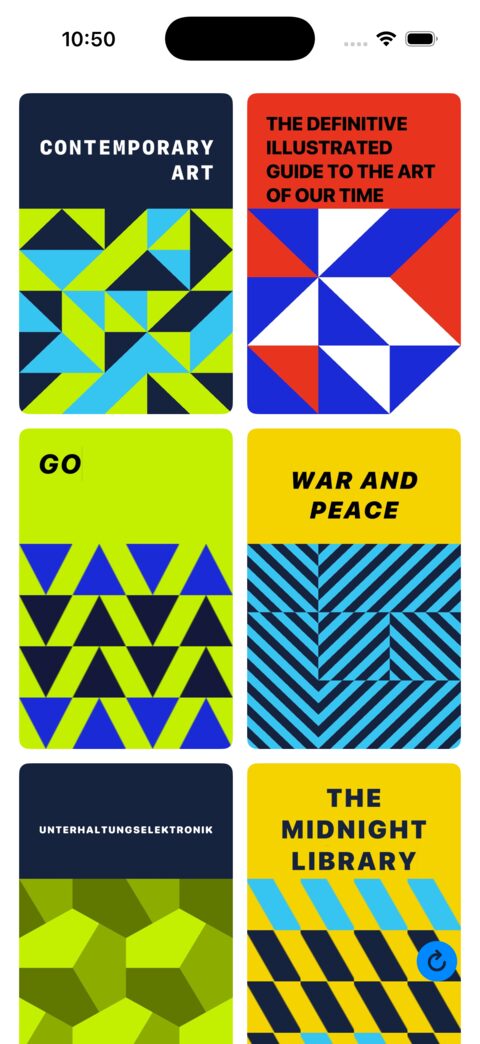
Your most-used tool is whatever lets you read real material with unknown words one tap away. Reading in a new language used to mean a book in one hand and a dictionary in the other, breaking your flow every few seconds. Tap-to-translate fixes that: touch a word, get its meaning in context, keep reading. This is exactly what oqou is built around — you bring in whatever you want to read, from novels and news to your own PDFs, and tapping any word gives you an instant in-context meaning without leaving the page. It runs on-device and stays private, which matters when the material is yours.
A spaced-repetition system
You need somewhere for saved words to live and get reviewed on a forgetting-curve schedule. A standalone flashcard app works, but it's far smoother when saving and reviewing are built into the same place you read — tap to save while reading, then review those exact words later, each still attached to the sentence you met it in. One loop, no copying between apps.
Audio for your ears
Reading builds the words; listening teaches you to catch them at conversational speed. You don't need a special app — a podcast player, an audiobook, or the audio built into your reading tool covers it. Aim for material you can mostly follow, and re-listen to favorites, since the second pass is where a lot clicks. Premium natural-sounding voices help if you want audio for texts that don't have any.
A speaking partner
The last tool is a person. A tutor on a lessons marketplace or a free exchange partner gives you the real-conversation practice no app can fully replace. You only need this once your comprehension has a running start — until then, self-talk and shadowing keep your mouth in the game for free. Four jobs, a couple of tools, and you're fully equipped to teach yourself.
A self-study plan that works
Here's a self-study system you can start today and run for months without a teacher: pick material you love, read a little every day, save and review the words you meet, add listening and speaking as you grow, and keep the streak alive with a tiny daily floor. Follow these five steps in order and the rest takes care of itself.
Everything in this guide condenses into a repeatable system. Think of it as a loop you spin daily, not a course you finish — each turn makes the next one easier.
- 1Choose material you actually want — pick a book, news source, or topic you'd read anyway, at a level where you catch the gist. Interest is what keeps you coming back.
- 2Read a little every day — anchor a short session to an existing habit like morning coffee, and set a floor so small you can always hit it, even on your worst day.
- 3Save and review words in context — tap unknown words as you read, save them with their sentence, and spend a few minutes on spaced-repetition review to make them stick.
- 4Layer in listening and speaking — add podcasts and shows you can mostly follow, then start self-talk, shadowing, and eventually a tutor or exchange partner.
- 5Keep the streak and adjust — track progress so it stays visible, expect plateaus, and nudge the material slightly harder as understanding grows.
The beauty of this system is that it scales to whatever life throws at you. On a heroic day, read a full chapter, do a tutor session, and watch a show. On a terrible day, hit the five-minute floor and call it a win — the streak survives, which is all that matters. There's no week where you're too busy to keep the chain alive, and there's no plateau the system can't push through, because the answer to almost every stall is the same: a bit more input, slightly harder, on something you enjoy.
What makes it work over the long haul is that it removes the two things that kill self-study — decision fatigue and boredom. You always know your next move, and your next move is always something you chose because it interests you. Do that on repeat, and the language stops being a project you're grinding through and becomes a small, pleasant part of your day. That's how people teach themselves languages: not through a burst of heroic effort, but through a modest loop they actually enjoy, spun a little every day for a long time.
Frequently asked questions
How long does it take to learn a language by yourself?
It depends on the language's distance from ones you know, your daily hours, and what “learn” means to you, so no honest answer gives a fixed date. Expect months to reach comfortable reading and basic conversation, longer for full fluency. But you'll see motivating progress — recognizing words, following the gist — within the first few weeks.
Is it cheaper to learn a language on your own than take classes?
Usually, yes. Self-study's core — reading, listening, and saving words — can cost almost nothing, and a reading app is a fraction of tuition. Your main optional expense is occasional online tutoring for speaking, which you can buy an hour at a time. You control the spend, and you can go far before paying anything at all.
Can I learn a language alone without ever speaking to anyone?
You can reach strong reading and listening comprehension entirely alone, but speaking is a separate skill that only develops through use. If conversation is a goal, you'll eventually need output practice — self-talk and shadowing get you surprisingly far solo, and a few exchange or tutor sessions bridge the rest. Skip speaking entirely and it simply won't develop.
What's the biggest mistake self-learners make?
Confusing studying about a language with learning it — grinding grammar tables and app streaks while getting almost no real input. The fix is to spend most of your time understanding meaningful messages you enjoy: reading and listening to things you'd choose anyway. Keep grammar in a supporting role, and protect volume above all. Second-biggest mistake: quitting during a plateau.
Do I need to learn grammar rules to teach myself a language?
Not many, and not up front. Most of your grammar will come from meeting structures repeatedly in your reading until they feel natural. Keep a concise reference for the moments a specific pattern keeps tripping you up, look it up, and get back to reading. A light touch of grammar clarifies your input; heavy drilling rarely transfers to real use.
Teaching yourself a language was never about having a teacher — it's about surrounding yourself with language you can understand, a little more each day, and giving the new words somewhere to land. You can start that from exactly where you are: one text you want to read, one word tapped, one sentence saved. If reading is where you want to begin, oqou is free on the App Store — bring in something you actually want to read, and let your self-study start on the very next page.